2 min read
Abuse Prevention in the Age of AI
Addressing Deepfakes and CSAM in Youth-Serving Organizations In recent years, the rapid evolution of artificial intelligence has opened new...
4 min read

Imagine asking an employee in October about something they learned during orientation the previous January. They would probably remember the big ideas, but could they recall every reporting requirement? Every supervision expectation? Every policy for field trips, chaperones, transportation, or overnight programs?
Probably not.
That's not because they weren't paying attention. It's because that's how people learn.
Research on learning and memory has consistently shown that we naturally forget information over time if it isn't reinforced. Psychologist Hermann Ebbinghaus first described this phenomenon more than 100 years ago through what is now known as the "Forgetting Curve." While people don't forget everything, they do lose details and confidence over time if they aren't given opportunities to revisit and apply what they've learned.
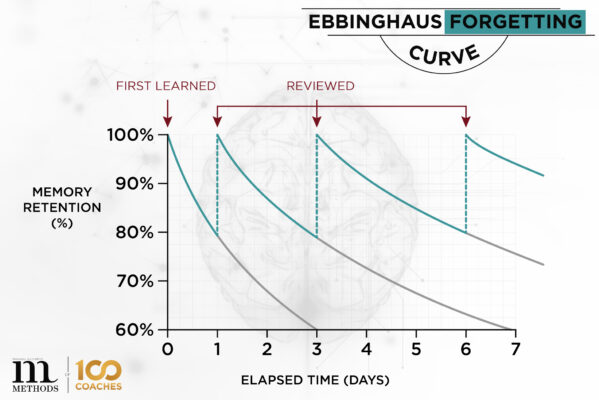
https://methodsof.com/blog/the-ebbinghaus-forgetting-curve/
That's exactly why annual refresher training has become standard practice across so many organizations. For example, in the 2026 Praesidium National YSO Benchmarking Report, we found that in 73% of National Federated Youth-Serving Organizations, adults with access to consumers are required to repeat abuse prevention training regularly, up from 50% in 2023. Organizations increasingly recognize that one training at onboarding isn't enough.
But here's the question: Why do we stop there?
If we know that reinforcement improves retention, why are so many organizations limiting abuse prevention training to onboarding and one annual refresher?
The strongest prevention cultures don't.
They recognize that training isn't just a course employees complete. It's an ongoing conversation that keeps abuse prevention visible throughout the year.
That doesn't mean scheduling more full-day trainings or requiring employees to complete another online course every few months. In fact, some of the most effective training opportunities are simple, focused, and easy to integrate into everyday work.
Opportunities like:
These moments may seem small, but together they reinforce expectations, build confidence, and help employees remember what matters when they need it most.
Annual training is incredibly valuable. It creates a shared foundation and ensures everyone understands the organization's expectations. But it shouldn't be the entire training strategy. It should be the foundation for continuous reinforcement throughout the year.
One of the easiest ways to reinforce learning is through just-in-time training. Rather than relying on employees to remember something they learned months ago, provide a quick refresher immediately before they are about to put that knowledge into practice.
These conversations don't need to be lengthy. Ten or fifteen minutes is often enough to put prevention at the front of employees' minds before they take on supervision in higher-risk situations.
Staff meetings are another opportunity that's often overlooked.
Many organizations already dedicate time to operational updates, upcoming events, or program changes. Why not spend five minutes reinforcing one abuse prevention topic?
The goal isn't to re-teach the entire course. It's simply to keep prevention visible and remind employees that these expectations are part of everyday operations, not just annual compliance requirements.
Organizations naturally revisit training after a serious incident, but some of the most valuable learning opportunities happen before an incident occurs.
Near misses often reveal weaknesses in systems that can be addressed before someone is harmed:
Rather than viewing these situations as close calls to quickly forget, use them as learning opportunities.
Ask:
These conversations help organizations strengthen their practices while reinforcing that continuous improvement is everyone's responsibility.
Every time a story involving abuse, misconduct, or organizational failure appears in the news, organizations have an opportunity to learn. Instead of simply forwarding the article, use it to start a conversation.
Ask staff:
The goal isn't to criticize another organization. It's to help employees connect prevention principles to real situations and think critically about how they would respond in a similar situation.
Organizations can also use trends from their own incident reports to identify topics that deserve additional attention. If multiple incidents involve transportation, supervision during transitions, or boundary concerns, those topics should shape future training conversations.
Strong prevention cultures aren't built through orientation alone. They aren't built through annual refresher training alone, either.
They are built through consistent reinforcement:
None of these moments replace formal training. They make formal training more effective.
When organizations create a rhythm of reinforcement throughout the year, employees are more likely to remember expectations, recognize concerns, make safer decisions, and speak up when something doesn't seem right.
Because the goal of training isn't simply to deliver information once a year.
It's to ensure people have the knowledge, confidence, and awareness to put prevention into practice every single day.
Praesidium helps organizations strengthen their training efforts through comprehensive abuse prevention training, consulting, Accreditation, and data-informed recommendations that reinforce safe practices beyond onboarding and annual refresher training. Through Praesidium Academy, organizations have access to role-specific online courses, while other options like Praesidium’s Mini-Minders provide quick, practical training videos that can be easily incorporated into staff meetings, pre-shift huddles, just-in-time reminder conversations, or pre-activity discussions before higher-risk activities like field trips and overnight programs.
Together, these resources help organizations create a sustainable rhythm of reinforcement that keeps abuse prevention top of mind, strengthens knowledge retention, and equips employees and volunteers to confidently put prevention into practice every day.

2 min read
Addressing Deepfakes and CSAM in Youth-Serving Organizations In recent years, the rapid evolution of artificial intelligence has opened new...

1 min read
In many organizations, abuse prevention is not ignored. It is discussed. It is trained on. It is embedded into policies and procedures. Over time,...

1 min read
Across social services, behavioral health, and residential care settings, we hear a familiar refrain: